First: Seasonal or Year-Round?
This is the most important question when designing a cabin solar system. A seasonal cabin (spring through fall) can get away with a smaller, simpler system because peak sun hours are higher and cold weather battery concerns are minimal. A year-round cabin needs to handle winter conditions: shorter days, lower sun angles (you may need tilted panels), and cold-weather battery management.
Seasonal Cabin (Spring–Fall)
- 4.5–6 peak sun hours typical
- Standard LiFePO4 batteries work fine
- Panels can be flat-mounted
- 1–3 days of autonomy is sufficient
- Simple MPPT system works well
Year-Round Cabin
- 3–4 peak sun hours in winter
- Heated battery enclosure or self-heating batteries
- Tilted/adjustable panel mounts essential
- 3–5 days of autonomy + generator backup
- Larger array to compensate for low-angle sun
Typical Cabin Power Loads
| Appliance | Watts | Duty Cycle | Hours/Day | Wh/Day |
|---|---|---|---|---|
| 12V DC compressor fridge | 45W | 35% | 24h | ~378 Wh |
| LED lighting (4 fixtures) | 40W | 100% | 5h | 200 Wh |
| TV (32" LED) | 50W | 100% | 3h | 150 Wh |
| Laptop | 65W | 100% | 4h | 260 Wh |
| Phone charging | 20W | 100% | 3h | 60 Wh |
| Water pump | 60W | 15% | 24h | 216 Wh |
| Diesel heater (fan only) | 30W | 100% | 12h | 360 Wh |
| Typical daily total | ~1,624 Wh | |||
Cabin Solar Is Different
Unlike vans and RVs, off-grid cabins aren’t constrained by roof space or weight limits. You can use full-size residential panels (400–550W each), install ground-mount arrays at the optimal angle, and run longer cable distances with higher-voltage configurations. This means better economics and more design flexibility.
Ground Mount vs. Roof Mount
| Ground Mount | Roof Mount | |
|---|---|---|
| Tilt angle | Fully adjustable, optimal year-round | Fixed to roof pitch (often suboptimal) |
| Maintenance | Easy to clean, clear snow, inspect | Requires ladder, safety equipment |
| Shading | Place in sunniest spot on property | Limited by cabin location/trees |
| Snow | Easy to brush off or set steep angle | Harder to clear, can cause ice dams |
| Cost | Higher (racking, concrete, trenching) | Lower (existing structure) |
| Land use | Takes up yard space | Uses otherwise wasted space |
| Wire run | Longer (50–200 ft typical) | Shorter (10–30 ft) |
How Much Solar Does a Cabin Need?
Weekend Retreat
Lights, phone charging, small fridge
1–2 kWh/day
400–800W solar, 1–2 batteries
Seasonal Cabin
Full fridge, lights, water pump, laptop
3–5 kWh/day
1000–1600W solar, 5–10 kWh battery
Year-Round Homestead
Full kitchen, well pump, washer, power tools
8–15 kWh/day
2000–4000W solar, 15–30 kWh battery
Cabin Panel Selection Tips
- Go big on panel wattage. Residential 400–550W panels cost $0.30–$0.60/W — much cheaper per watt than smaller RV/van panels. Fewer panels = less racking, fewer connections, simpler wiring.
- Check snow load ratings. If your cabin gets heavy snow, ensure panels are rated for at least 5400 Pa (113 psf) snow load. Most quality panels meet this. Ground mounts let you set a steeper tilt (45–60°) so snow slides off naturally.
- Use a 48V system for long wire runs. If your panels are 100+ feet from the cabin, a 48V battery system (or high-voltage MPPT input) minimizes voltage drop and wire costs. Most cabin-scale all-in-one inverters support 48V.
- Plan for winter production. In northern states, winter solar output is 40–60% of summer output. Size your array for the worst month you’ll use the cabin, or pair solar with a backup generator for the deepest winter weeks.
- Consider bifacial panels if you ground-mount in a snowy area. Bifacial panels generate extra power from light reflected off snow onto the back of the panel — a 5–15% winter bonus.
Cabin System Configurations
- 400W solar (2× 200W panels, flat-mounted)
- 200Ah LiFePO4 (2,560 Wh, 2 days autonomy)
- 30A MPPT controller
- 1,000W pure sine inverter
~$2,500–$3,500 total system cost
- 800W solar (4× 200W, tilted mounts)
- 400Ah LiFePO4 at 24V (4× 100Ah 12V, 2S2P)
- 40A MPPT controller
- 2,000W inverter/charger
- Generator input for backup
~$5,000–$8,000 total system cost
Cabin-Specific Considerations
Generator Integration
A generator is an important backup for off-grid cabins — especially in winter. An inverter/charger (such as the Victron MultiPlus or Renogy Inverter Charger) automatically switches between battery, solar, and generator input. When the battery gets low and there's been no sun for days, the generator kicks in to top it up.
Generator tip: Run it at higher loads (60–80% capacity) for efficiency. A 2kW generator charging at full rate is more fuel-efficient than running it at 500W for four times as long.
Panel Tilt Angle for Winter
For year-round cabins, panel tilt should be set to your latitude + 15° for best winter output. In Montana (lat ~47°), that's 62° tilt — much steeper than typical summer-optimal 30–35°. Adjustable mount brackets (manual seasonal adjustment, two positions) are a cost-effective solution.
Cold-Climate Battery Management
LiFePO4 batteries cannot be charged below 32°F (0°C). For a cabin, options are:
- Insulated battery enclosure — A well-insulated wooden or foam box with the batteries inside prevents rapid temperature swings. The batteries self-heat slightly from discharge.
- 12V heating pad — A thermostatically-controlled heating pad attached to the battery bottom activates only when needed.
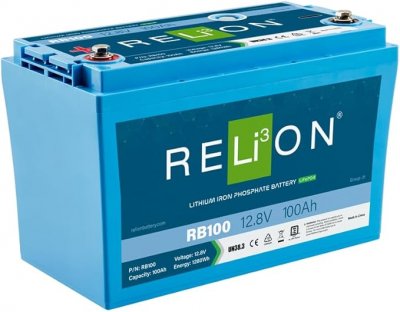
- Self-heating batteries — RELiON InSight series and some newer Renogy models have built-in heaters that activate before charging at low temperatures.
Water System Considerations
A cabin water pump draws relatively little power (60W at ~15% duty cycle = ~216 Wh/day) but the pressure tank must be sized correctly. A standard 20-gallon pressure tank reduces pump cycling. If you have a deep well pump (230VAC, 1/2–1HP), you'll need a large inverter and possibly generator power for pumping.
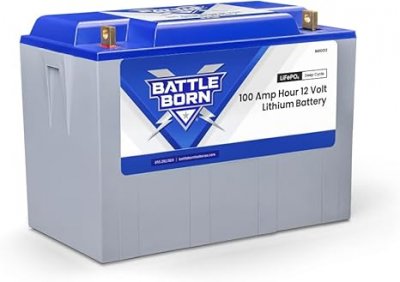
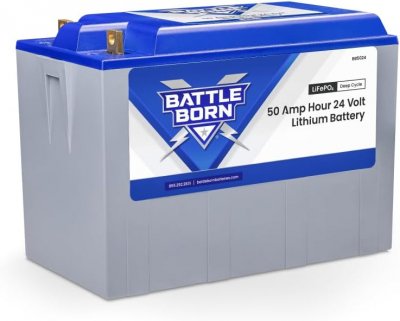
Recommended Cabin LiFePO4 Batteries
🇺🇸 Pricing on Amazon USDisclosure: Amazon links are affiliate links. We may earn a commission at no extra cost to you. For cold climates, prefer batteries with built-in heater (look for "Built-in heater" in specs below).
Size your cabin solar system
Use the Cabin preset in our calculator — tweak the loads, autonomy days, and your region's sun hours to get a precise recommendation.
Open Cabin Calculator