1. Your Battery
2. What needs to stay on?
Tick the loads you want during the outage. Watts and run-time share are typical values; edit them to match your appliances. The furnace blower row is the one most people forget.
| Load | Watts | % of time on | kWh / day |
|---|
3. Outage Length & Solar
4. Compare With a Generator
Fuel prices default to AAA US national averages from early October 2026, when diesel sat near its all-time high. Change them to your local pump price.
Plug-In Backup Options (No Installer Needed)
🇺🇸 Pricing on Amazon USPortable power stations are the fastest way to get backup for a fridge, furnace blower, medical gear and internet. Pick one with at least 2,000 Wh for an overnight outage; add expansion batteries or solar panels for longer events.
Disclosure: Amazon links are affiliate links. We may earn a commission at no extra cost to you.
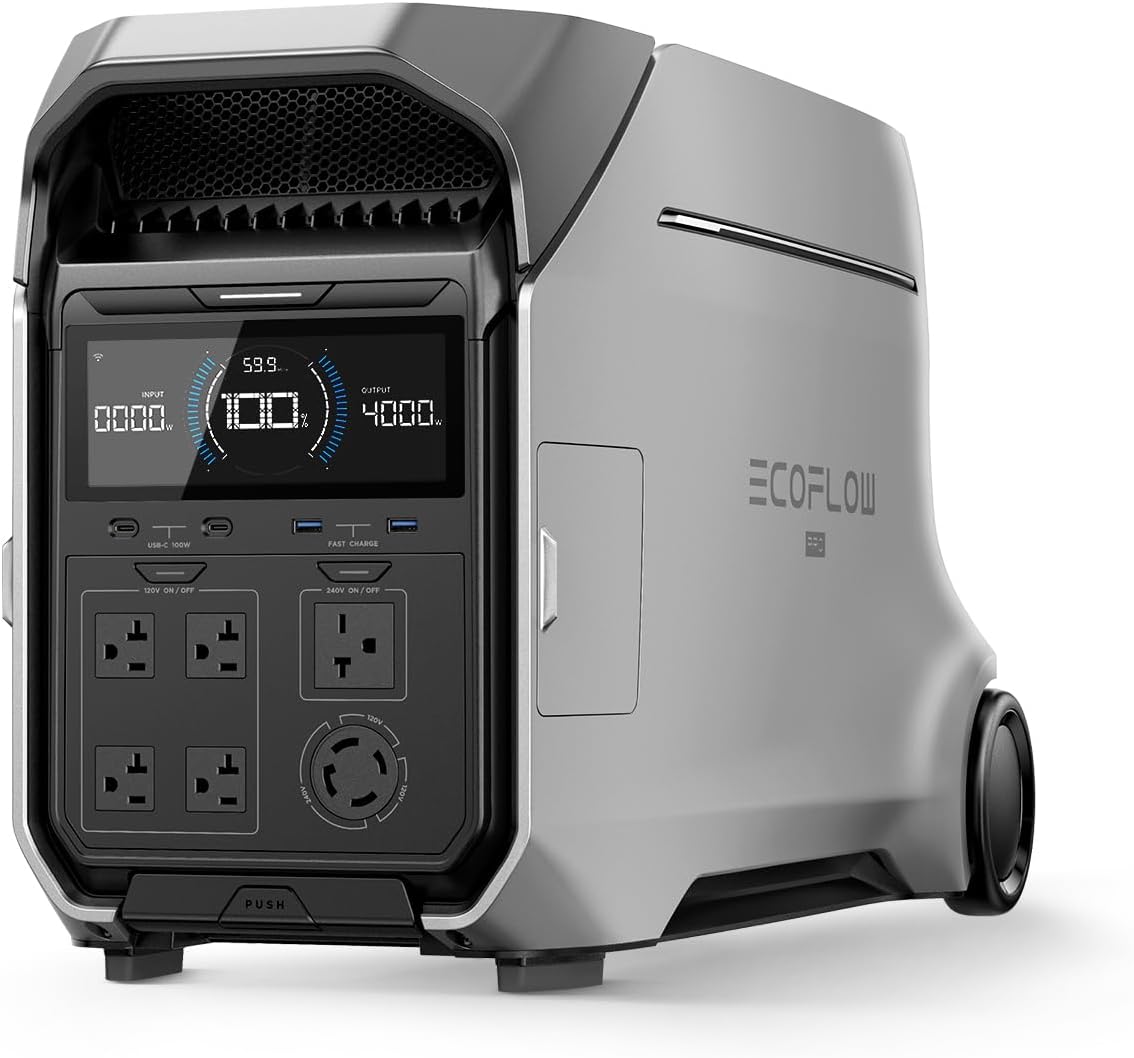
EcoFlow
DELTA Pro 3
- 4,096 Wh LiFePO4
- 4,000W output
- Runs 8 kWh/day essentials for ~11 h
- Expandable to 48,000 Wh
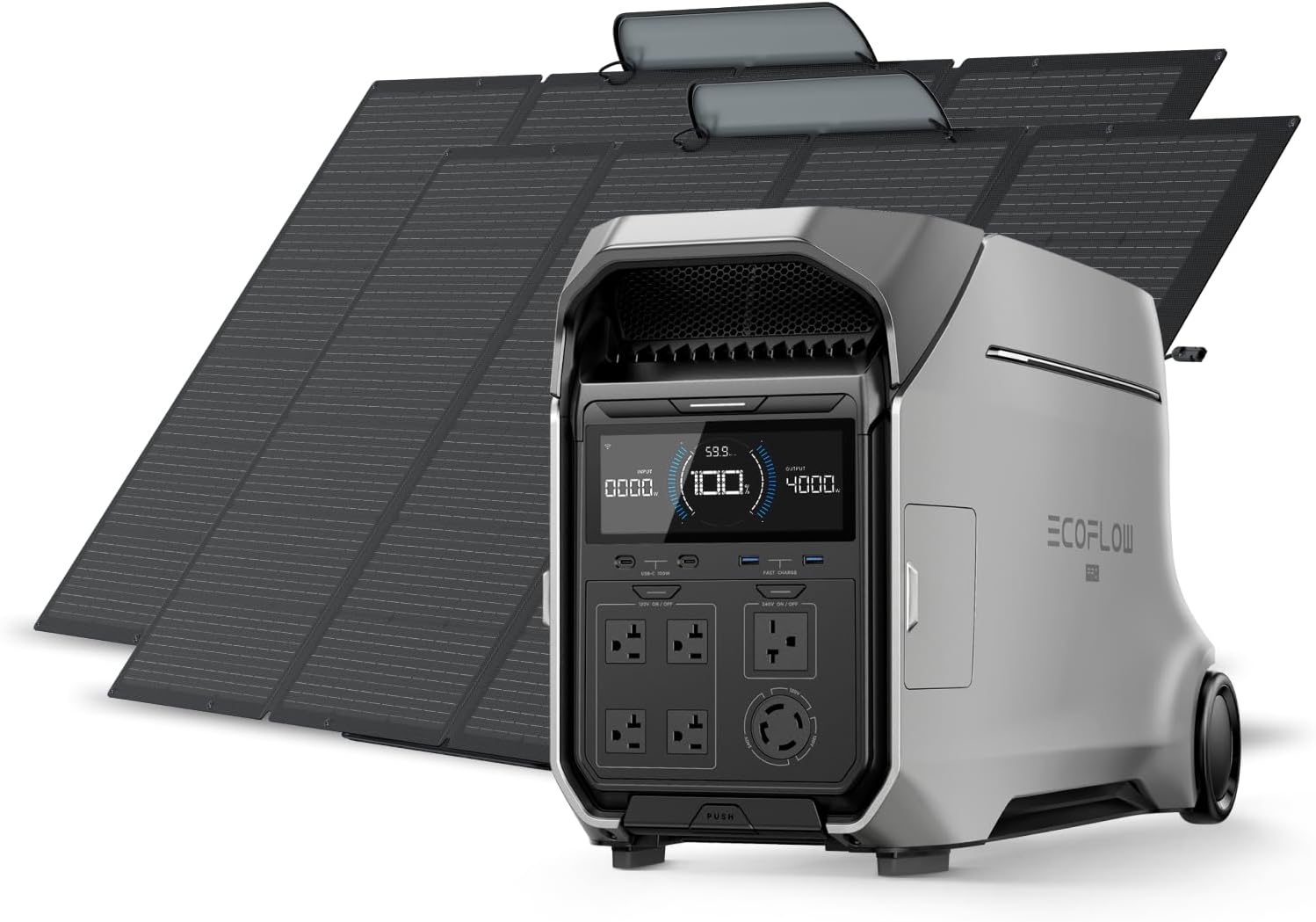
EcoFlow
DELTA Pro 3 + 2×400W Solar Kit
- 4,096 Wh LiFePO4
- 4,000W output
- Runs 8 kWh/day essentials for ~11 h
- Expandable to 48,000 Wh
How Long Does a Home Battery Last in a Power Outage?
Runtime is simply usable capacity divided by your average load. The table below assumes an essentials-only load of about 8 kWh per day (fridge, freezer, gas furnace blower, LED lights, internet, phones, a TV) and a whole-home load of 30 kWh per day, the US average.
| Battery | Usable kWh | Continuous kW | Essentials (8 kWh/day) | Whole home (30 kWh/day) |
|---|---|---|---|---|
| Anker SOLIX F3800 / EcoFlow DELTA Pro 3 | 3.8–4.0 | 4–6 | ~12 h | ~3 h |
| Enphase IQ Battery 5P / Jackery 5000 Plus | 5.0 | 3.8–7.2 | ~15 h | ~4 h |
| SolarEdge Home Battery / Enphase 10C | 9.7–10 | 5–7 | ~30 h | ~8 h |
| Tesla Powerwall 3 / EG4 PowerPro | 13.5–14 | 10–11.5 | ~40 h | ~11 h |
| FranklinWH aPower 2 / LG RESU16H | 15–16 | 7–10 | ~45 h | ~12 h |
| 2 × Powerwall 3 | 27 | 23 | ~80 h | ~22 h |
| DIY 48V 100Ah LiFePO4 (5.1 kWh) | 4.3 | inverter-limited | ~13 h | ~3.5 h |
Figures are rounded and assume no solar recharge. In winter a gas furnace blower can add 3 to 6 kWh per day on its own; electric heat, heat pumps and well pumps change the picture completely, which is why the calculator lets you tick them individually.
Battery vs. Generator: Running Cost at Today’s Fuel Prices
A generator is cheap to buy and expensive to run, and in 2026 it is more expensive to run than ever: US diesel has been trading near its all-time high above $6 a gallon and gasoline above $4. Generators also burn a surprising amount of fuel just to idle. A small essentials load of 1.5 kW on a 7.5 kW gasoline generator costs around $40 a day in fuel, and the same load on a 22 kW propane standby unit costs around $75 a day.
| Backup source | Fuel use at 1.5 kW load | Cost per 24 h | Cost per kWh delivered |
|---|---|---|---|
| 7.5 kW gasoline portable ($4.41/gal) | ~9 gal/day | ~$40 | ~$1.10 |
| 20 kW diesel ($6.30/gal) | ~9 gal/day | ~$57 | ~$1.60 |
| 22 kW propane standby ($3.50/gal) | ~21 gal/day | ~$75 | ~$2.10 |
| Home battery recharged from grid ($0.17/kWh) | none | ~$6 to recharge 36 kWh | ~$0.17 |
| Home battery recharged by solar | none | $0 | $0 |
The battery’s weakness is multi-day outages with heavy loads: a 13.5 kWh unit cannot carry a 30 kWh/day home for more than half a day without solar. The practical answer for many households is a battery for the first day and quiet overnight hours, plus either solar that can island or a generator that runs a few hours a day to top the battery up. Running a generator only to recharge a battery is far cheaper than running it 24 hours, because the generator works at an efficient load instead of idling.
Sizing Rules of Thumb
- Essentials for one night: 3 to 5 kWh usable. A large portable power station or one small home battery.
- Essentials for 24 to 48 hours: 10 to 15 kWh usable. One Powerwall-class battery, or 2 to 3 DIY 48V 100Ah LiFePO4 batteries.
- Whole home for one day: 25 to 35 kWh usable. Two to three large batteries, or one battery plus solar.
- Peak power: the inverter must cover everything that can switch on at once. A well pump (1,000 W start surge to 3,000 W), central AC (3,500 W) or an electric water heater (4,500 W) each need a 5 kW or larger inverter.
- Winter solar: count on 65 percent of annual output, less in the Pacific Northwest and northern Europe. See the winter solar sizing guide.
Battery Backup FAQ
How long will a home battery last during a power outage?
Divide the usable capacity by your average load. A 13.5 kWh battery running typical essentials (about 8 kWh per day) lasts roughly 40 hours. The same battery running a whole home at 30 kWh per day lasts about 11 hours. A 5 kWh battery covers essentials for about 15 hours. Solar panels extend this if your system can island from the grid.
How many kWh of battery do I need for backup power?
For essentials only, plan 8 to 10 kWh per day of outage. For whole-home backup in an average US home, plan 25 to 35 kWh per day. One day of essentials fits in a single 10 to 15 kWh battery. A two-day whole-home outage needs 50 kWh or more, which is why most whole-home systems pair the battery with solar or a generator rather than stacking batteries.
Can a battery backup run a furnace?
A gas or propane furnace only needs electricity for the blower, igniter and controls, typically 400 to 700 W while running and 3 to 6 kWh per cold day. Any home battery with a 3 kW or larger inverter can run it. An electric furnace or heat pump in heating mode draws 3 to 10 kW and will drain a 13.5 kWh battery in a few hours, so those usually need a generator or a very large battery bank.
How much does it cost to run a generator per day?
At early October 2026 US fuel prices (gasoline about $4.41 and diesel about $6.30 per gallon, propane about $3.50), a 7.5 kW gasoline generator carrying a 1.5 kW essentials load burns roughly 9 gallons and costs about $40 per 24 hours. A 22 kW propane standby generator at the same load burns about 21 gallons of propane, around $75 per day. A 20 kW diesel unit burns about 9 gallons, around $57 per day. Generators burn a lot of fuel just idling, so light loads cost far more per kWh than the fuel energy content suggests. The calculator above uses your own fuel price.
How much fuel does a generator use per hour?
A portable gasoline generator of 5 to 8 kW uses about 0.3 gallons per hour at light load and 0.6 to 0.9 gallons per hour at half load. A 20 kW diesel generator uses about 0.6 gallons per hour at quarter load and 1.6 gallons per hour at full load. A 22 kW propane standby generator uses roughly 1 gallon per hour at light load and 2.5 gallons per hour at half load. Your manual lists exact figures; the calculator estimates them from generator size, fuel type and your load.
Is a battery or a generator better for power outages?
A battery wins for short and medium outages: silent, instant switchover, no fuel, no carbon monoxide, and it can be recharged by solar. A generator wins for multi-day outages with heavy loads such as electric heat, well pumps and air conditioning, because fuel stores far more energy per dollar of hardware. Many homes combine a battery for the first 24 hours with a generator or solar for longer events. With diesel and gasoline near record prices, the running cost of a generator matters more than it used to.
Will solar panels recharge my battery during an outage?
Only if your inverter supports islanding (backup mode). Standard grid-tied inverters shut down when the grid fails. A hybrid or battery inverter with a transfer switch keeps solar running. Expect about 65 percent of annual production in winter: a 6 kW array gives roughly 12 to 16 kWh per winter day in the southern US and 6 to 9 kWh in the northeast, enough to carry essentials indefinitely with a 10 kWh or larger battery.
Related Calculators & Guides
Tesla Powerwall Calculator
Powerwall-specific sizing with installed cost and savings.
Open CalculatorLiFePO4 Battery Calculator
Build a DIY 48V battery bank instead of buying a wall unit.
Open CalculatorWinter Solar Sizing
Winter sun hours by region, heating loads and cold-weather batteries.
Read Guide