Why Winter Breaks Summer-Sized Systems
Four things hit at once in winter. Days are shorter, so the array sees fewer hours of light. The sun sits low, so a flat or roof-pitched panel catches it at a poor angle. Skies are cloudier across most of the US and all of northern Europe. And snow can cover panels for days. The combined effect is a 35 to 50 percent drop in daily output across most of the US, and 60 to 75 percent in the Pacific Northwest, the UK and northern Europe. Meanwhile loads often go up: furnace blowers, longer lighting hours, block heaters, and people indoors all day.
Winter Peak Sun Hours by Region
Peak sun hours (PSH) are the equivalent hours of full 1,000 W/m² sun per day. The annual column is what most calculators use. The calculator column is what our system calculator applies when you switch it to winter (a flat 35 percent reduction). The last column is the real December–January range for a south-facing array tilted at latitude + 15°; use it as a custom PSH value if your region sits at the low end.
| Region | Annual PSH | Winter (calculator) | Typical Dec–Jan |
|---|---|---|---|
| Southwest (AZ, NV, NM, Southern CA) | 6.0 | 3.9 | 4.0–4.8 |
| South (TX, FL, LA, AL, HI) | 5.5 | 3.6 | 3.3–4.2 |
| Central / Mid-South (CO, KS, TN, NC) | 5.0 | 3.3 | 2.8–3.8 |
| Northern / Central California | 5.0 | 3.3 | 2.5–3.5 |
| Mid-Atlantic / Southeast (VA, GA, OH) | 4.5 | 2.9 | 2.3–3.2 |
| Northeast (NY, MA, PA, MI) | 4.0 | 2.6 | 1.8–2.8 |
| Pacific Northwest / Alaska (WA, OR, AK) | 3.5 | 2.3 | 0.9–1.8 |
| Southern Europe (Spain, Italy, Greece) | 5.5 | 3.6 | 2.5–3.5 |
| Central Europe (France, Germany) | 4.5 | 2.9 | 1.0–1.8 |
| UK, Ireland, Scandinavia | 3.5 | 2.3 | 0.5–1.2 |
Ranges are rounded from long-term NREL and PVGIS style irradiance data for fixed, optimally tilted arrays. Roof-pitched or flat panels do worse; a tracker or seasonally adjusted mount does better.
Sizing Panels and Batteries for Winter
The formula does not change, only the sun hours do:
Array watts = daily Wh × 1.25 (losses) ÷ winter PSH
Battery Wh = daily Wh × days of autonomy ÷ 0.85 (LiFePO4 usable)
Worked example for a cabin using 2,000 Wh per day in the Central US:
| Sized for | PSH used | Array needed | Battery for 3 days |
|---|---|---|---|
| Annual average | 5.0 | 500 W | 7.1 kWh |
| Winter (calculator) | 3.3 | 760 W | 7.1 kWh |
| Pacific Northwest December | 1.5 | 1,670 W | 7.1 kWh, plus generator |
Three rules follow from the numbers. First, add panels rather than batteries: a bigger array is the only thing that produces energy on a short day, while a bigger battery just stores a deficit for longer. Second, plan 3 to 5 days of autonomy in winter instead of 1 to 2, because cloudy stretches last longer. Third, below about 2 winter sun hours a small generator or a grid connection for January is cheaper than the panels needed to avoid it.
Tilt, Snow and Mounting
- Tilt at latitude + 15° for winter. Denver or Philadelphia (40°N) wants 55°; Seattle or Montana (47°N) about 62°. A two-position adjustable bracket, changed in October and April, captures most of the gain.
- Steep panels shed snow. Above 45° most snow slides off within a day of sun. Flat and roof-pitch arrays can stay buried for a week.
- Ground mounts win in snow country. They can be tilted steeply, cleared with a soft broom, and raised above drift height.
- Bifacial panels pick up 10 to 20 percent extra from light reflected off snow when mounted off the ground.
- Cold helps slightly. Panel voltage rises in the cold, so output per unit of light is higher. Check that string voltage at your coldest temperature stays below the charge controller limit; a string that is fine at 25°C can exceed it at -25°C.
Heating Loads: What Each Option Costs in Electricity
Heat is the load that decides whether winter off-grid is realistic. Electricity is the worst way to make heat from a battery; fuel is the best. The table shows the electrical cost of keeping warm for one 8-hour night.
| Heating option | Electrical draw | kWh per 8-hour night | Battery to carry it |
|---|---|---|---|
| Propane heater (Buddy type, vented) | 0 W | 0 | None |
| Diesel heater (van / cabin, 2–5 kW heat) | 20–40 W fan + glow plug at start | 0.2–0.4 | A single 12V 100Ah |
| Electric blanket or heated mattress pad | 60–100 W | 0.5–0.8 | A single 12V 100Ah |
| Mini-split heat pump (9,000 BTU, mild climate) | 900 W at ~50% duty | 3–4 | One 48V 100Ah, or 5 kWh |
| 750 W space heater | 750 W | 6 | Two 48V 100Ah or one small wall battery |
| 1,500 W space heater | 1,500 W | 12 | Three 48V 100Ah or one Powerwall-class unit |
Can you run a space heater on solar?
You can, and the math shows why almost nobody does it off-grid. A 1,500 W heater running 8 hours uses 12 kWh. Replacing that in a 3 sun-hour winter day takes about 5 kW of panels, roughly 12 large modules, dedicated to one heater. On the battery side it is the entire usable capacity of a Tesla Powerwall 3 or three 48V 100Ah LiFePO4 batteries. A 750 W heater on its low setting halves all of that and is a workable overnight solution in a well-insulated room if you already have a Powerwall-class battery or a large portable power station. For everything else, heat with fuel and spend the electricity on lights, pumps and electronics: a diesel heater uses about 1 percent of the electricity of a space heater for the same warmth, which is why the van life community standardised on them. A mini-split heat pump is the exception for grid-tied or large off-grid homes in mild climates, delivering 2 to 3 units of heat per unit of electricity above about -5°C.
LiFePO4 Batteries Below Freezing
Lithium iron phosphate must not be charged below 0°C / 32°F. The lithium plates onto the anode instead of inserting into it, and the capacity loss is permanent. Discharging is fine down to about -20°C with reduced capacity. Four ways to handle it, cheapest first:
- Keep the battery inside the heated living space. In a van or cabin this is usually the whole answer.
- Insulated box plus a 12V heating pad on a thermostat (20–40 W). Costs $30–$60 and keeps a battery bank above freezing in an unheated shed.
- Self-heating batteries use the incoming charge current to warm an internal pad before accepting charge. No wiring, no thermostat, a $50–$150 premium per battery.
- Low-temperature charge cut-off in the BMS is the minimum requirement for any battery that might see frost. It does not keep you charging, but it stops the damage.
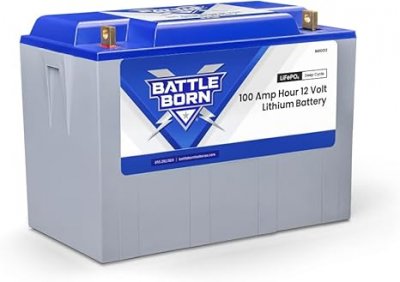
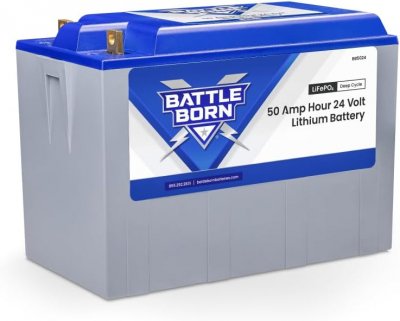
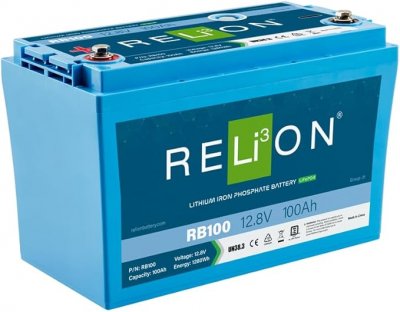
LiFePO4 Batteries for Cold Climates
🇺🇸 Pricing on Amazon USDisclosure: Amazon links are affiliate links. We may earn a commission at no extra cost to you.
Winter Checklist
Before the first snow
- Re-tilt panels to latitude + 15°
- Re-run the calculator in winter mode with real December loads
- Check string voltage at your coldest temperature against the controller limit
- Clean panels; dirt costs more when every sun hour counts
- Test the generator and stock fuel while prices allow
Batteries and loads
- Move or insulate the battery bank; confirm low-temperature charge cut-off
- Raise days of autonomy to 3–5
- Swap electric heat for fuel heat; keep the furnace blower on the backup list
- Set the inverter low-voltage cut-off a little higher; cold batteries sag
- Plan for a 20–30 percent capacity drop at -10°C
Winter Solar FAQ
How much less solar power do you get in winter?
In December and January a fixed array produces 35 to 50 percent less than its annual daily average across most of the US, and 60 to 75 percent less in the Pacific Northwest, the UK and northern Europe. The southwest drops from about 6 to about 4 peak sun hours; the northeast from 4 to about 2.3; Seattle from 3.5 to roughly 1.3. Shorter days, a low sun angle, more cloud and snow cover all stack up.
How many solar panels do I need in winter?
Divide your daily watt-hours by winter peak sun hours instead of the annual figure, then add 25 percent for losses. A cabin using 2,000 Wh per day needs about 500 W of panels on the annual 5.0 sun-hour figure but about 770 W on the winter figure of 3.3, and over 1,600 W in a 1.5 sun-hour Pacific Northwest winter. Sizing for winter is what makes a system work year-round; a summer-sized system runs the generator all winter.
Do solar panels work in winter and in snow?
Yes. Cold panels are actually more efficient per unit of sunlight; the problem is less sunlight and snow cover. A steep tilt of latitude plus 15 degrees sheds snow and catches the low winter sun. Bifacial panels on a ground mount gain 10 to 20 percent from light reflected off snow. A panel under a few inches of snow produces almost nothing until it is cleared or the snow slides off.
Can you run a space heater on solar power?
You can, but it is the most expensive way to make heat. A 1,500 W space heater running 8 hours overnight uses 12 kWh, which is the usable capacity of a Tesla Powerwall or three 48V 100Ah LiFePO4 batteries, and needs about 5 kW of panels to replace in a 3 sun-hour winter day. A diesel or propane heater uses 20 to 40 W of electricity for the same warmth, an electric blanket uses 60 W, and a mini-split heat pump delivers 2 to 3 units of heat per unit of electricity in mild climates.
Can LiFePO4 batteries be charged in freezing weather?
Not below 0°C / 32°F. Charging a frozen LiFePO4 cell plates lithium onto the anode and permanently damages it. Good batteries have a BMS that blocks charging below freezing; self-heating batteries warm themselves from the charge current first. Discharging is fine down to about -20°C. For winter installs keep the battery inside the heated space, in an insulated box with a small heating pad, or buy a self-heating model.
What tilt angle is best for solar panels in winter?
Your latitude plus 15 degrees. At 40 degrees north (Denver, Philadelphia) that is 55 degrees; at 47 degrees north (Seattle, Montana) about 62 degrees. The steep angle faces the low December sun, sheds snow and can add 20 to 30 percent over a 30-degree summer tilt. Adjustable brackets with two positions, changed in October and April, are the usual off-grid compromise.
Size it for December
Open the system calculator with the winter sun-hour setting already selected, add your appliances and see the array and battery you really need.
Open Winter Calculator